Oh, I didn’t see that everything was explained here
Bell Studies for the Clock of the Long Now
- it’s these small details added to Ardour that continues to impress me (not sure how long that statement was in the ‘About’ section.
- That statement is the thinking/outlook I have grown into without knowing there was a movement
- Thanks!
James
Ardour release codenames are Brian Eno album titles and we hope he can keep up with Ardour releases 
January 07003: Bell Studies for the Clock of the Long Now - Wikipedia
only for the 9.7 (and aborted 9.6) release.
9.5’s codename was Drawn from Life - Wikipedia
3 Likes
If not, you could use albums the community made with ardour😉
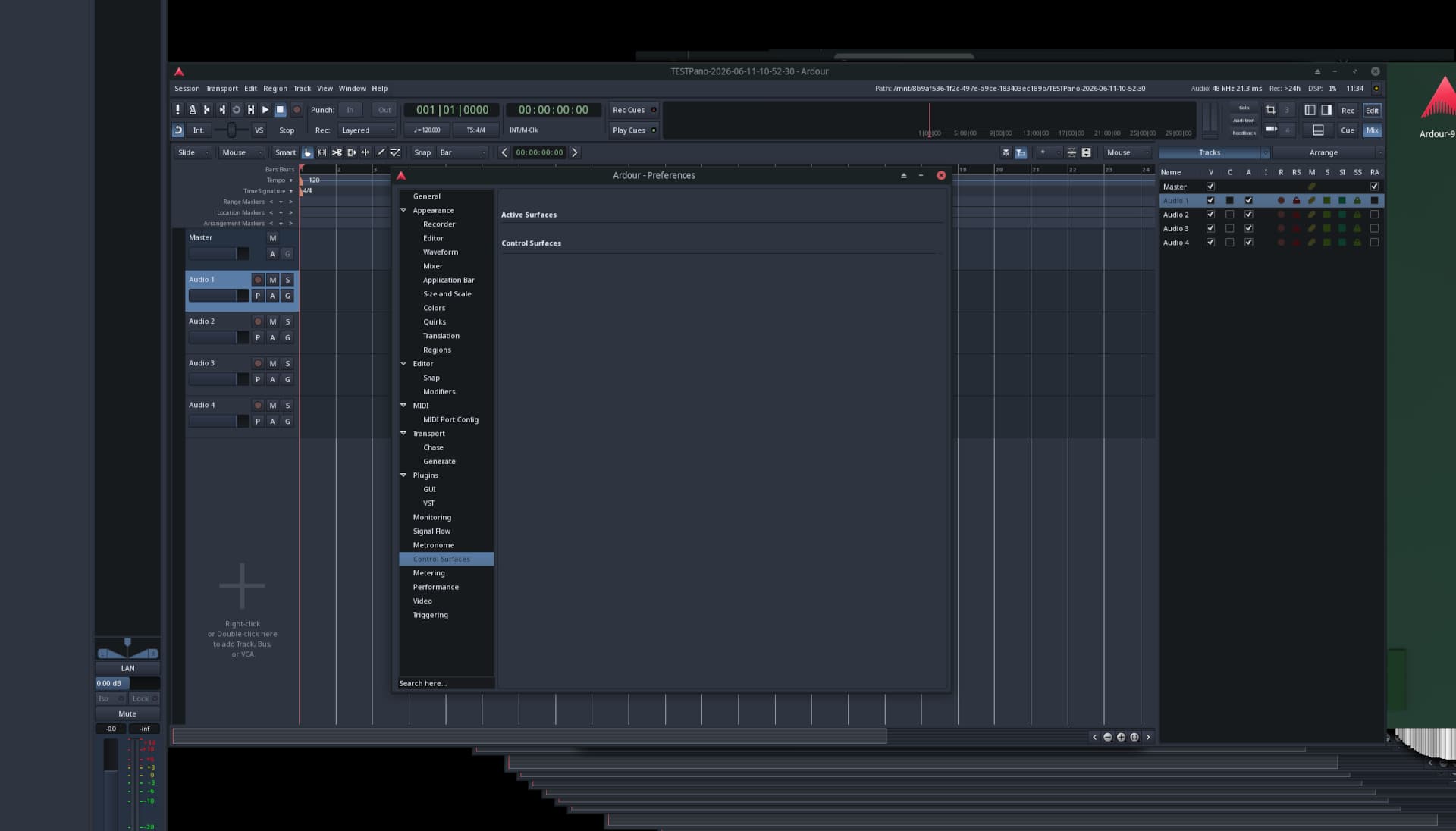
The problem is caused by using UI scaling below 100%. It has already been fixed in git (thus, in the nightlies).
Many thanks for your fast reply. Just to clarify, does this mean the 9.7
download is not fixed yet?
Warmest regards as ever
We don’t “fix” a release. It is whatever it is/was at the time it was released. We haven’t judged this to be a sufficiently critical bug to merit another release yet. Subscribers and self-builders can get the fix already.
Thank you for all of your hard work on this. It works fine using the
nightly build.
As a matter of curiosity, is this an x11/ Wayland problem? The reason I ask
is that I will shortly be rebuilding the music PC, and I wonder if anyone
has any views on the future of X11.
Since moving to Linux around 2012-ish ( Ubuntu Warty Warthog, I think), I
have used two applications which, in my opinion, are peerless and have no
equivalent. One of these is Ardour, the other is Darktable. Thank you,
Paul, and all of the team, for their tireless work
Many Thanks
Alastair Fulcher
Hi,
There is probably no future for X11 (aside from XWayland) and the ‘big’ Desktop Environments (Gnome, KDE, XFCE4, LXQt at the very least). So I suppose for many people it will be Wayland without question… However not all of Linuxdom bows to the will of the Red Hat gods and Open Source is a two-edged sword where some things manage to hold on against all odds (ie Devuan, antiX, Artix and MX remaining systemd-free or optional). Although the XLibre project has been a public relations nightmare it’s code seems pretty robust, I’m using it daily and it actually uses less RAM than Xorg and I have no issues running Ardour and all my regular applications. I’m certainly not a Wayland-hater or an Xlibre zealot, my current DE doesn’t have Wayland fully implemented yet so I’m curious to see if X11 has a horse that can still run until such time as there is no longer a vaild choice. Ardour at this point seems better with X11 and since they have no plans to turn it upside down for Wayland I would personally make my DE choice for a future PC build around Ardour not the Desktop Environment… Just my opinion…
1 Like
No, it’s unrelated to X11 or Wayland. It was caused by a very small but consequential coding mistake that only causes problems if the UI scale is set below 100%.
1 Like
Probably a dumb question but how does one enable the vertical summary? “Disabled by default” but I can’t find a setting for it in Preferences.
EDIT: yep that was a dumb question. It’s in the menu: View > Show Vertical Summary.
Thank you, Glen, for your opinion and thank you again, Paul
Must we, nobody is forcing distros to use anything.
There are more subtle ways than force to get things done, the end result is often the same. What other organization has reinvented the init system, audio server and graphics compositor which is then adopted by every other mainstream Distro (sometimes to benefit and sometimes not)? Red Hat calls the tune and that has been clearly illustrated many times over, whether that’s good or bad is above my pay grade but it’s a curious thing to observe that Linux isn’t as free of corporate oversight and influence as it says on the can.
Nice catch, updated the release notes accordingly.
1 Like
Off-topic, but I have strong thoughts on this as someone who wants Linux (specifically GNU/Linux) to remain free of corporate influence. It really sucks that so many giant corporations are huge sponsors of the Linux Foundation (meaning they presumably have some sway over what happens, though I’m not sure of the exact amount of leverage in practice) and that corporations such as Red Hat and Canonical have such large amounts of influence over the GNU/Linux ecosystem.
That being said: Most of the infrastructural improvements I have seen since I started using GNU/Linux (first Ubuntu, then CrunchBang Linux, and then Debian) have been genuinely useful. While PulseAudio was a nightmare initially, it also was a genuine leap forward for the average usecase (e.g. being able to play a YT video and be on a video call at the same time). While systemd is highly opinionated and has done some questionable things, it also has made it way easier to get a good system overview, sandbox programs, cap resource usage, and overall manage the system.
It’s not that it was impossible to do earlier, and it’s not even that systemd is the only way to do it (clearly not, if s6, runit, etc have anything to say about it). But it had the resource backing to actually get distros to move away from sysvinit, which is absolutely awful for many of those things.
Don’t even get me started on Xorg. While Wayland makes a ton of controversial decisions (some are absolutely mindboggling, like not dealing with color profiling properly even today), in my experience it has turned GNU/Linux into a mostly plug-and-play system that actually works without too much fuss. The number of times I randomly had my xorg.conf borked for no reason (usually after an upgrade) is something I don’t wish to relive.
I won’t deny that sometimes they push to bring things inside systemd that…probably don’t belong there. But overall, I do think the standardization (and sometimes reworking of how core things operate) has been beneficial to the ecosystem at large.
It’s funny because Canonical, the other large operator in this space, tends to introduce their own competing stuff which has almost always been inferior to whatever Red Hat produces while also being quite a bit more centralized (think snap vs flatpak, for example). And their projects ended up failing in general (Upstart, Unity, Mir, etc) and they were forced to adopt the same stuff everyone else was using. The only reason snap is still a thing is that they literally force Ubuntu users to use it lol — otherwise it would have died a long time ago.
Anyway, I do overall think these projects have been beneficial to the ecosystem at large because it removed pointless differences and created a common base which most GNU/Linux software can expect to be available (and if you don’t want to use it, you’re on your own). Sure, there was arm-twisting from Red Hat folks, but the software is also genuinely useful and solved a ton of pain points (particularly from the developer side) that had existed for a long time.
Such opinions on all sides are informed by personal User experiences, I guess I’ve been very lucky, since 2006 I’ve never had to mess with a single xorg.conf nor did sysvinit ever fail or cause one issue that caused me any downtime. As far as PulseAudio when I let it do what it was designed to (Desktop Audio) it worked perfectly but I will admit as an Audio Distribution maintainer I pretty much had to provide a working PulseAudio/JACK solution (with pajackconnect) that I never used myself so to that end I agree that PipeWire was a good move forward. I find the three packaging formats (Snap, Flatpak, AppImage) to solve the original 2 packaging format (Deb, RPM) problem to be a solution devoid of any common sense… 
I don’t think Wayland as it is currently going is going to move the needle for Linux ease of use, sure perhaps it will get some edge-case Graphics up and running easier but is Xorg’s track record really so bad in this regard? If you’re an Ardour user you may bump into Wayland issues later so to me AS IT IS NOW I don’t think Wayland is eating Xorg’s lunch across the board just yet…
2 Likes
Not to mention an extreme waste of hard-drive space and extra headache of permissions and file access.
4 Likes
110% agree lol  We should have just stuck to deb/rpm + appimage if you want something self-contained. Proponents would argue though that flatpak (especially) also does sandboxing and such, but…you can do that with
 firejail, bubblewrap, systemd, AppArmor profiles, or SELinux (if you’re super hardcore). None require the packaging format/runtime itself to integrate sandboxing.
I really think it just depends. I think it’s lowered the bar for casual GNU/Linux usage (I’m emphasizing GNU here because Android is also a Linux distro technically, but that doesn’t count), perhaps at the cost of certain things that Wayland just doesn’t want to implement.
Maybe I’m lucky, but I’ve never run into Wayland-specific issues (I use sway if it matters), at least not that I can recall. I haven’t run into many issues with Ardour at all, for that matter.
1 Like