To the Ardour Development Team,
I am writing this letter as a professional composer, photographer, and videographer. Recently, I decided to leave my commercial subscription with Studio One to embrace Ardour, drawn by its outstanding open-source philosophy, rock-solid audio engine, excellent video synchronization via Harvid, and native timecode locking capabilities.
However, after attempting to integrate Ardour into a real-world scoring workflow, I encountered a major obstacle that makes daily composition extremely difficult: the rigidity and UI constraints of the Tempo Track.
In modern film scoring and production, musical expression relies heavily on human feel—micro-rubatos, organic accelerandos, and freehand tempo adjustments. In Ardour, handling tempo changes feels unnecessarily rigid:
No freehand drawing or flexible tempo curves: Having to rely solely on discrete mathematical nodes and linear ramps for every small expressive nuance kills the creative flow.
UI limitations: The inability to vertically expand the tempo track on the main timeline to work on a comfortable visual scale makes fine editing on a thin ruler very frustrating.
Looking through the official forums and feature request trackers, it is clear that I am not alone. Numerous composers have repeatedly asked for a more flexible, expandable, and drawable tempo management system. Unfortunately, the response from the development side seems consistently negative, often dismissing these requests in favor of rigid architectural dogmas about discrete nodes.
We understand and respect the engineering precision behind Ardour. However, when software refuses to adapt to the natural, gestural workflow of musicians, it creates a barrier to entry that no technical stability can overcome.
Many of us are eager to support independent, open-source software and leave behind expensive commercial subscriptions. But if these fundamental usability requests continue to be rejected, composers will simply be forced to take their time, projects, and financial contributions elsewhere—towards platforms like REAPER or back to commercial DAWs that accommodate these workflows.
We sincerely hope the development team will reconsider its stance on tempo editing and prioritize human-centered tools for composers in upcoming releases.
Sincerely,
We do not believe that you actually need or want to freehand draw curves.
We suggest that you watch the Harrison Mixbus video on “tempo mapping”, which will explain how we handle “human feel”. We believe we handle it better than other DAWs, but not in the way you are expecting.
Ciao caro, ti ringrazio per la risposta.
Due problemi:
personalizzazione della tempo map, lontana da un bpm rigido (io mi occupo di film scoring e musica classica e un bpm serrato non è tipicamente stilistico)
libertà di lavoro sulla tempo track, personalizzazione estrema a vantaggio del risultato musicale.
ti prego, lavorate sul problema per risolvere questo aspetto del lavoro su Ardour
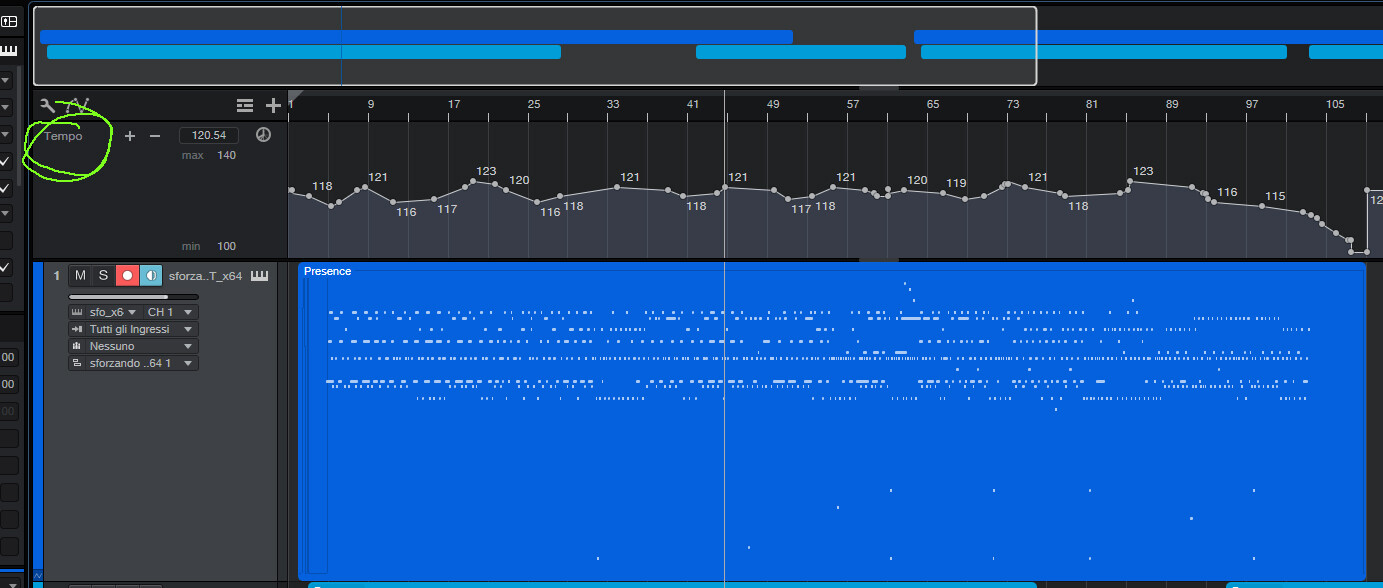
allego una immagine per mostrarti il grado di personalizzazione che solitamente uso sulla mia tempo track; quindi si… HAI BISOGNO DI CREDERE che mi serva disegnare a mano la traccia del tempo
I do not understand. Ardour can do all of that. The only thing I can see that I think you want is the ability to drag the dots up and down to change over a large vertical range …
Da docente ti dico che questa funzione non è “andare su e giù col mouse” ma una funzione importantissima per la gestione del tempo, velocissima e capace di farti capire immediatamente cosa sta succedendo e dove. Perdonami ma si vede che non hai esperienza nello scoring di lungo metraggi e Sync continua, questa funzione velocizza e programma immediamente la traccia. Quando hai da gestire 60 tracce di orchestra, droni e suoni d’ambiente per due ore, ti assicuro che non hai tempo per pensare a tutte quelle filosofie da nerd. La traccia tempo in Ardour non si vede nemmeno, con un po’ di presbiopia ti perderesti
I didn’t even know that something like this existed until now. It looks very cool/handy though, for quick, organic adjustments. I have that song from earlier this year (-with all those ‘crazy’ tempo and time-signature changes, if you recall) that could probably benefit from something like that. -An expandable tempo lane of sorts.
Although, to be fair, I first need to start dabbling with the use of the Grid Mode as Nathan mentioned in that video! It seems like a great tool. Don’t know why I didn’t start using it earlier…
Il video di mixbus è usato principalmente per imbrigliare una traccia suonata senza tempo. In studio One, una volta trovati i riferimenti del BPM, puoi cambiarlo a tuo piacimento e ricostruire una nuova griglia con i transienti impostato sul BPM del tuo progetto. La scrittura del tempo in modalità più libera aiuta a rimuovere l’effetto serrato della musica quantizzata
Then I would humbly suggest that you use Studio One.
When we looked at Studio One’s approach to the problem we were trying to solve - music played without a fixed tempo - we saw a lot of inefficiencies and reliances on automatic stuff that rarely works. The same was true of other DAWs that offer this sort of thing.
I can understand that you don’t like Ardour’s approach to this (which is identical to the one shown for Mixbus), and that’s totally OK. There is no DAW that is perfect for everyone. But the chances that we will revisit tempo mapping based on “you don’t do this work, look at Studio One, that’s how it ought to be” are pretty small.
Non volevo offendere Nessuno e se l’ho fatto, pur senza intenzione, chiedo scusa.
Se ho abbandonato studio One Fender è perchè iniziavo a non condividere la filosofia. Studio One è un Programmone, ma Ardour è affascinante e pieno di punti di forza, tra cui il collegamento con jack. Parlando del mio lavoro, diventa difficile spostare ogni singolo punto in maniera matematica, senza poter personalizzare il movimento e il respiro. Ti parlo di sistemi di videoscrittura, con la possibilità di "dirigere"la partitura con un battito live, come per una orchestra… è questa la mia idea… la possibilità di muovere la macchina secondo metronomi e palpitazioni reali e fluide. se Ardour Riuscisse ad incrementare questo sistema, sarebbe una macchina da guerra anche per il film scoring, non credi?
Hai degli esempi di sonorizzazione audio/video realizzate in Ardour?Mi piacerebbe imparare e faccio fatica a trovare video online.
I’ve been using tempo-mapping a lot since it came out, to make my music breathe more. I tend to create a piano guide track, recorded without a click. I might have several attempts and also tweak the MIDI before I render it and then move the grid to match the wav. Then everything else is recorded to the tempo-mapped click.
It can be a bit trail-and-error trying to get the tempo variations right and once the map is created, it isn’t easy to amend, having to edit tempo markers a bar at a time.
I don’t know what other trickery Studio One or other DAWs might have, but a tempo map lane like the screenshot strikes me as being incredibly useful. Firstly as a way of visualising the tempo map and the ebbs and flows, but mainly if you could select a range of tempo markers and move them up or down as a group to massage parts of the map on a larger scale rather than marker by marker. Would a lane like that not be possible in Ardour?
If not, I can live without it and I’m not going anywhere, been using Ardour for over 20 years. But if something like that were possible I think it would be a powerful addition to the existing tempo-mapping features.
Un caro amico mi aveva suggerito di provare a incidere una riduzione del pianoforte senza BPM e poi costruirci sopra una tempo map, esattamente come stai dicendo tu. Tutto questo significa anche avere delle buone abilità di musicista, e non tutti le hanno… Per quanto Paul insista sul contrario, ardour ha una grossa lacuna sulla tempo map… Sto studiando Ardour e ne sono Felice, ma la tempo map è un problema, soprattutto quando la concorrenza è in grado di generare automaticamente il rimappaggio della canzone (anche di brani orchestrali)… Immagina farlo a mano per una sinfonia di 45 Min .
Sarebbe fantastico avere questa funzione avanzata del genere, Ardour ne uscirebbe molto ricco.
La tempo track va scritta anche con la matita e serve poterla ingrandire e tenere costantemente sotto controllo.
PS a proposito dei significati cabalistici di Ardour… Potresti leggerla come “Hard Hour” (ora difficile… Con questa traccia tempo, ci sarebbero meno ore dure)
Ability to select groups of tempo markers and move them up or down (i.e. proportionally slow them or speed them up).
Also, you could then visually depict the exact nature of the ramps you use for Ardour. E.G. instead of the linear lines (as shown in the screenshot), you could depict curves between tempo points that would reflect the true, mathematical ‘s-curve’ ramps Ardour is using. (-And even potentially offer different ramp styles, incl. linear and other shapes, much like you do with fades for regions. -Simply right-click on a ramp and select the shape you want.)
Altre DAW hanno già fatto passi da gigante in questa direzione ed è ormai diventata una parte fondamentale del lavoro quotidiano di molti di noi. Curve di tempo morbide e personalizzabili rendono l’esecuzione dei file MIDI incredibilmente più umana, fluida e naturale. Inoltre, poter esportare e condividere la tempo map tra diversi progetti o con altri collaboratori è oggi una necessità imprescindibile.
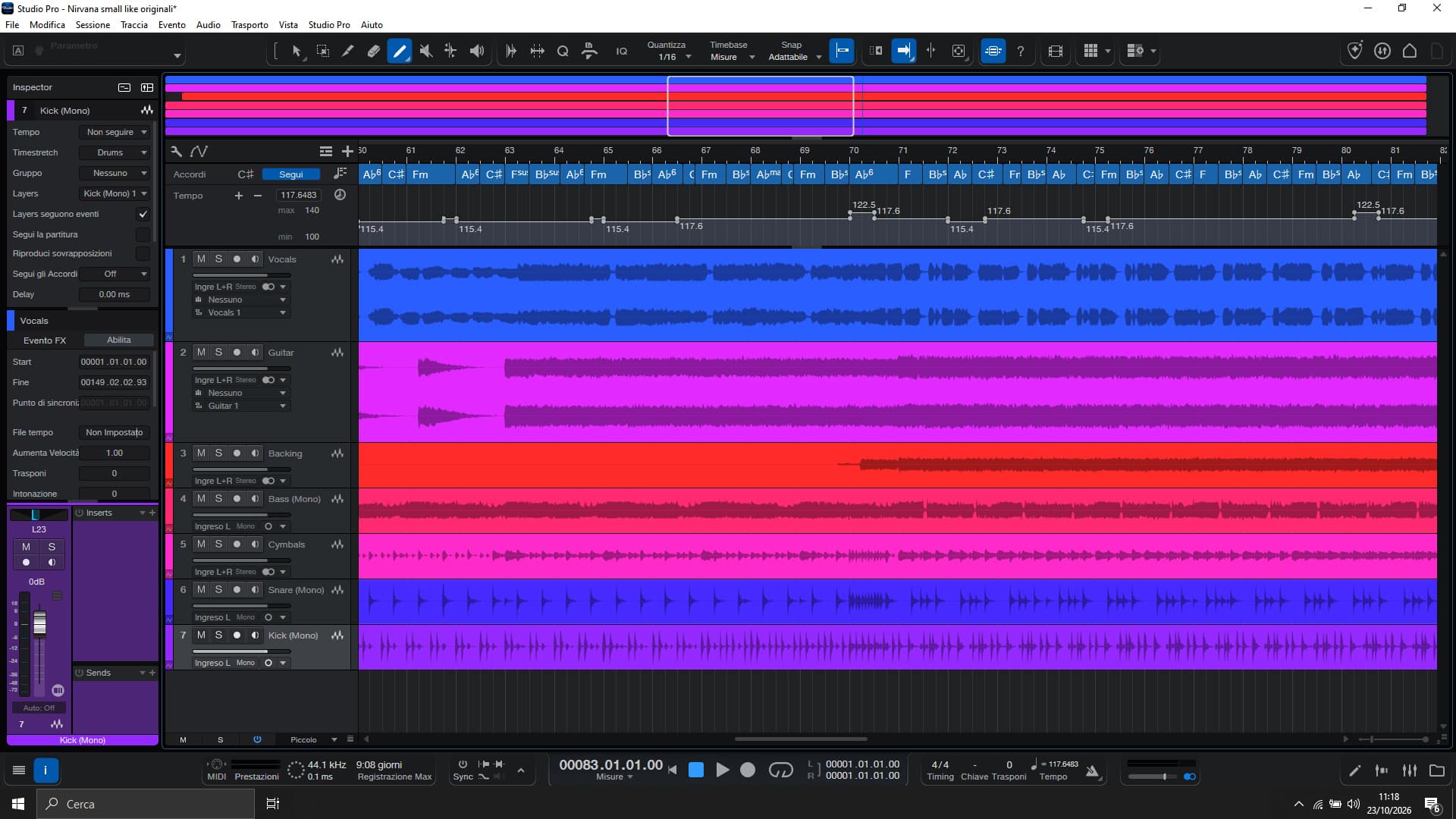
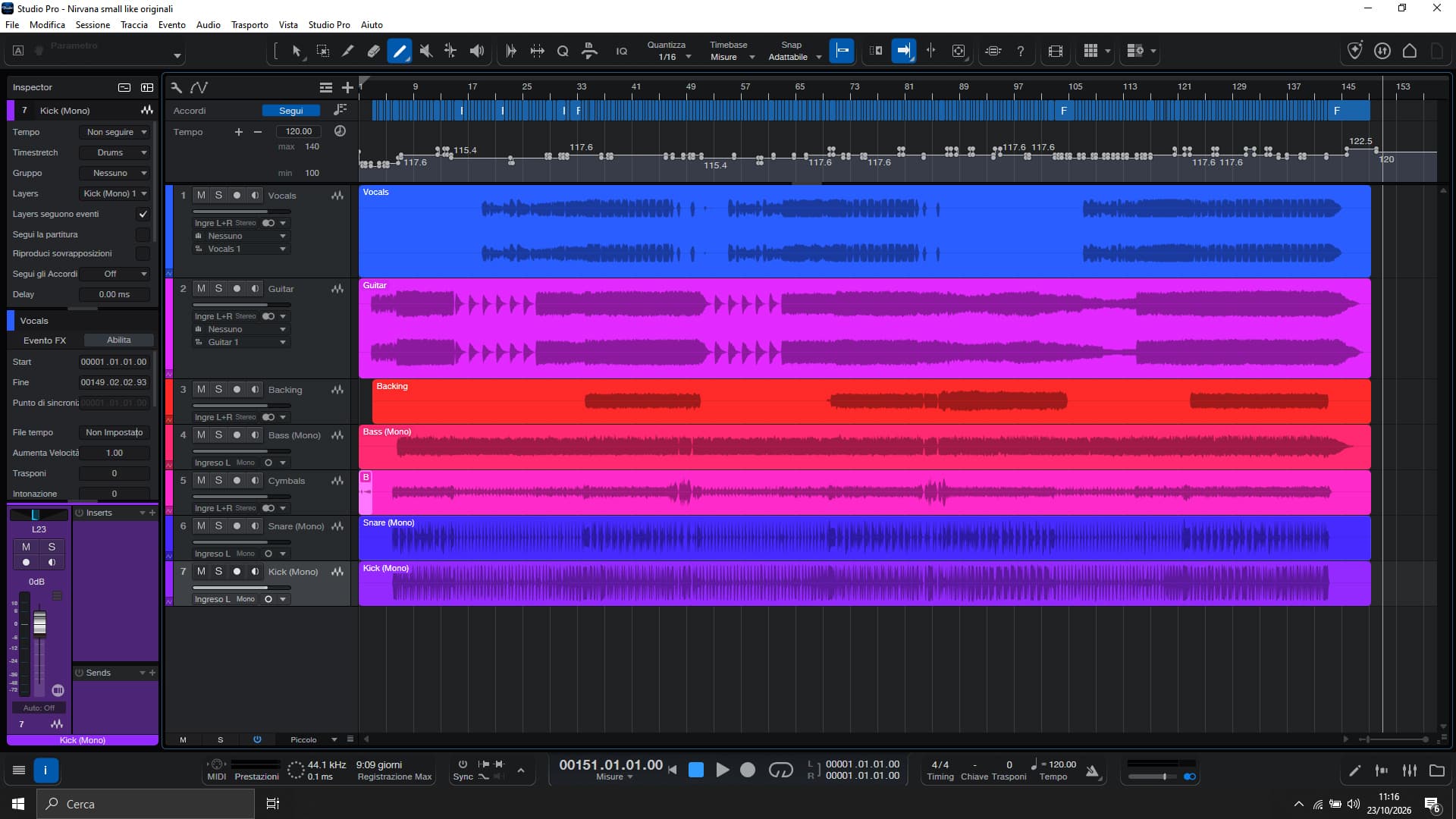
Proprio qualche giorno fa ho lavorato al bounce degli stem originali di un brano dei Nirvana; più tardi posterò uno screenshot della tempo map che ho ricavato, perché aiuta a capire visivamente quanto sia importante avere una gestione grafica e chiara delle variazioni di tempo. Alcune DAW consentono persino di agganciare il brano audio alla tempo track e agire direttamente sulla mappa del tempo per modificare l’andamento dell’intera traccia in pochi click.
Credo davvero molto nel futuro di Ardour e mi piacerebbe dare il mio contributo basandomi sulle mie esperienze sul campo e sull’uso continuativo di diverse DAW, programmi di videoscrittura musicale e montaggio video (tra cui Cubase, Sonar, Studio One, Adobe Audition, MuseScore, Finale, Sibelius, Edius e DaVinci Resolve).
The evidence I’ve seen is that there is only one kind of tempo ramp performed by musicians: linear in musical time (which turns into exponential in wallclock time). That is “play the next beat/bar X% faster/slower than the last one”. What varies is the “X%” part, which is just another way to measure the duration and extent of the ramp.
Yes, but X% could be variable, no? Like X% is at 1%, then 10%, then 25%, then 10%, then 1%. I suppose such a ‘small’ thing could become quite the rabbit-hole to look down… So for now, I’ll trust your judgement.
Anyway, I’m just now experimenting using Grid Mode. My project has a total of 153 tracks/buses, with 24 being midi tracks, but only 2 of those actually have any midi on them (so far). Unfortunately each attempt at clicking and dragging at a tempo marker (vertical) line results in Ardour processing/freezing for like 30-45sec…
I’ll create a snapshot with like 2 tracks and see if I can narrow-down why the hell it’s so slow. … -Perhaps all the millions of tempo markers and time-signature changes I have in this one song? Let me see…
I can find no evidence that performers ever do this. Our minds are amazing things, but they have their limits. “Double the speed every bar” is already pretty sophisticated … "Double the speed for this bar, then triple that for the next bar, then quadruple that for the next bar … " very challenging.
Remember also that most of the time such tempo changes are historically associated with dancing traditions, so its not just musicians who have to be able to follow.
Combining grid mode and an existing tempo map with hundreds of tempo changes is not the use case I had in mind.
If the tempo map is already supposed to be basically correct, then grid mode is not much help. OTOH, if you don’t have a vaguely sane tempo map, then grid mode is how to create it.



 .

 -Simply right-click on a ramp and select the shape you want.)
 … -Perhaps all the millions of tempo markers and time-signature changes I have in this one song? Let me see…