True! My point was that we had perfectly fine autocorrect before (as well as other things people love to compare with “gen” “AI” as if they’re the same) as well as things like text-to-speech and dictation. While they were and always will be flawed, they weren’t made with the intentions of LLMs, and can not be used for the same unfortunate purposes. Those projects are trying to aid people, not pretend to while ruining our creations and further poisoning our earth. That’s all I meant by it.
Plus, the jank in those technologies hasn’t and won’t die with LLMs, and unlike something actually made by people, it’s flaws are inherent and can’t truly be ironed out.
The amount of times I’ve heard “but we’ll be left behind” to brush aside concerns over LLMs could rival the number of breaths I’ve taken in my life thus far.
LLMs have already been shown to deskill talented people and cause more problems down the line then they solve, but those with money and power benefit from their adoption, so they try to convince people of their supposed necessity. Even if what you say were true, it wouldn’t erase a single problem at hand and would only further emphasize the need for FOSS projects to reject LLMs outright. The whole point of FOSS is community effort and creating things without relying on corporate structures that attempt to further hurt and divide us. I do not claim to be the arbiter of all things open source, but I do think the mere concept of an LLM flies in the face of FOSS as a concept. People will disagree, but even if I try to forgo my opinions, I see no way for FOSS and LLMs to coexist on a fundamental level.
8 Likes
LLM are great as a search engine.
On the other hand…Do your own f-----g research, you lazy b-----ds  !
!
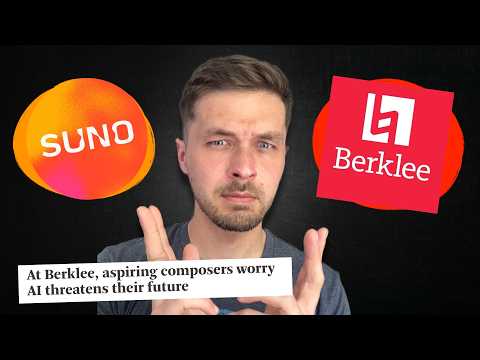
Assuming i understand you correct and i understand him correct, Adam Neely kinda came to a similar statement. I don’t really care for the AI topic at all, way too much noise right now, for my taste, but i always enjoy Adam Neely. So this is no argument by me for “it is always bad quality” or “it can be good quality too”. (We sure didn’t lack low quality music produced in massproduction in the past …). I only was reminded i watched that video. You and others might like it too, but probably will know it already anyway.
1 Like
indeed. I was riffing How AI is killing joy - Leahs Gedanken
it took me a while to find this post again. She writes “AI is the fast food of creative processes”, and compares it to frozen pizza. For some reason that stuck.
6 Likes
Please take a look at PR #986. can its quality be characterized as fast food, or frozen pizza?
I read Leahs Gedanken’s essay. The conclusion struck me as pretty extreme:
And please remember the people building AI, fueling it, and also those using it, ignore the social contract, a contract they so happily use themselves to prevent you from doing whatever you want with what they created.
except that some of us are using AI to create open source products.
I share a lot of the concerns about AI being dominated by large corporations creating proprietary products, but I think we’ve far more dependent on those corporations than we’d like to think. Do any of use computers who microprocessors aren’t secret, proprietary designs manufactured in multi-million dollar chip fabs that none of us could possibly duplicate? Isn’t that a lot like AI?
Are we not dependent on big corporations for the electricity that powers our proprietary hardware?
Do any of us drive cars?
I advocate for open technology, period. I’d like to see those chip designs made public, and I’d like to see those chip fabs downsided and opened so that every third world country can build their own computers without having to import them from the western-dominated global market. But I’m not going to stop using my Samsung laptop with its AMD processor waiting for that to happen.
I’m pretty well convinced that AI is the biggest breakthrough in software development I’ve seen in my lifetime. It’s not fast food. It’s working natural language processing. We can tell the machine in plain English what we want it to do, and it can figure out for itself how to instantiate a Lua interpreter in C++.
It’s also the biggest threat to free software I’ve seen in my lifetime. The extreme data and compute cost of training the models price it out of reach of small developers, and that makes it fundamentally different from every software development effort we’ve undertaken before. I don’t have any easy answer to what we can do about that. Yet it’s being clear that there’s also another threat - that many in the free software community are turning against it, and labeling the technology itself as fundamentally anathema to our values, while things like proprietary microprocessors get some kind of free pass.
Add into that the non-technical, creative crowd that are convinced it’s stealing their work. As if any of us learned to play an instrument without ever playing a cover.
Take PR #986. I don’t know how to instantiate a Lua interpreter. Sure, I could study it and learn, and if I had nothing else to do, maybe I would, just for its educational value. But I’ve got a lot of other stuff to do, and it’s so nice to develop a software architecture in plain English and just tell the machine to implement it.
Linus Torvalds, as he has done throughout his career, has found a pragmatic way to balance free software ideals with the current state of technology development. As did Richard Stallman when he developed emacs and gcc on proprietary operating systems, though he tends to be more fanatical than Linus. As do all the rest of use when we use proprietary hardware and piped-in corporate electricity.
The Linux kernel is allowing AI-generated code signed off by humans, and I think Ardour should emulate that policy. Otherwise you’re closing the door to things like PR #986.
All i see is that hype around generative AI (at least as far as i can see) is adopted by the same people that are always first to jump in with the newest trends, but don’t stick to anything for it to mean something.
This includes:
People who want to be graphic designers but they are to lazy to study basics of it and aren’t realy talelented for visuals - can’t even draw two parallel lines.
People who want to be programmers but don’t have the patience to learn any of the programming languages.
People who want to be music authors but they themselves never created a single melody in their entire life.
I can tolerate that to an extent. I don’t care if anybody likes to overblow his ego and live in imaginary blissful future they will be given on a silver platter, but the moment they ask me to validate those “creations” in any significant way, all they can get is “No”, upfront.
Just look at how Suno advertise itself, it’s disgusting. I don’t want any part in that.
And nobody is saying it’s okay that hardware is locked, as nobody is raising the issue of hungry in Africa…it’s just that it’s whole another topic. Linked? Yes. But, if we choose to take that communication route, then we’re not talking about generative AI in this topic, we’re talking about the state the whole f------- world…and i suppose that it wouldn’t be very productive .
I just had Claude read Thaler vs. Perlmutter, skimmed it myself, and finally realized something that took me a while to understand. Quoting that court ruling (pp. 18-19):
First, the human authorship requirement does not prohibit copyrighting work that was made by or with the assistance of artificial intelligence. The rule requires only that the author of that work be a human being—the person who created, operated, or used artificial intelligence—and not the machine itself. The Copyright Office, in fact, has allowed the registration of works made by human authors who use artificial intelligence.
This is considerably different from what is presented on Ardour Development:
Currently, following Thaler vs. Perlmutter in March 2025, no LLM-generated code may be copyrighted in the USA.
Now, Paul is completely within his rights to ban AI contributions from the project, but I think the statement used to justify this has, in my case at least, led to considerable misunderstanding. I was starting to think that LLM-generated code couldn’t be licensed under the GPL, and that’s just not true.
I respectfully suggest re-wording the statement on the development page to clarify that this is an Ardour policy decision, and remove the overly broad legal interpretation.
1 Like
My reading is that no US court (and I believe no court worldwide) has so far defined precisely what it is that a human needs to do in order to be considered the author of a work generated by a machine. The US courts have been clear that if it was only generated by a machine, it cannot be copyrighted, but have also been clear that there is some amount of work that a human could do in relation to the generated artifact which would change that. They have not, however, defined the nature or extent of that work.
2 Likes
Recently I watched the entertaining https://www.youtube.com/watch?v=fi29pfLcW4I with Linus Torvalds, a guy famous for using some AI to design open-source guitar pedals (hardware and software).
He has also some obscure pet projects like Linux and GIT which are GPLv2 and they discuss in the interview the use and impact of AI on these projects.
1 Like
Linus’ position in the kernel is that humans must have done “enough” to be able to accept code that was initially generated by an LLM.
He’s free to define “enough” any way he wants, but no court has done so.
In one hypothetical (and it is, realistically, utterly hypothetical), a court could set the standard “for enough” and most or all of the LLM-originated contributions to the kernel could be rendered un-copyrightable.
We haven’t tried to describe the “did you enough to make this copyrightable” issue, because at the moment I don’t think it can really be done in a useful or sensible way. There’s no question that a human can take output from an LLM, do some stuff, and end up with something that is copyrightable. The question is how much work does it take, and that has not been answered, regardless of Linus attempting to move forward with his own hand-waving answer.
2 Likes
In a very short time AI will be everywhere as it is the new tool to easily do almost anything. Here is an example, Google created an realtime playable instrument with it: Magenta RealTime 2: Open & Local Live Music Models
I can see a future where we have instrument plugins that create sounds and process audio with the help of AI. The only limiting factor now seems to be ram size, but fast forward 10 - 20 years or even 50 I can see a future where AI is just the new “integrated circuit” and being everywhere. In the end AI may be even integrated into some IC:s soldered onto circuits boards.
Despite misgivings and doubts about what LLMs can actually do, not to mention their energy, social, political and economic impacts, Ardour’s AI policy is not based on any of that. It is based on a court ruling that says that machine-generated work cannot be copyrighted. If it cannot be copyrighted, it cannot be licensed, and thus we cannot included it in the project.
I’d also note that a shortage of instrument plugins in general (not specifically on Linux) is hardly the limiting factor in human musical creativity at this point.
7 Likes
Of course not. But one built with AI is not limited to a instrument, it can do all sorts of music / instruments at once while you control it with prompts and a midi keyboard.
But that is not the point of my post, this example just shows that AI can modify, handle, create any data that is composed of some kind of forms / shapes / patterns it can recognize. This opens up almost limitless possibilities of use cases you can apply AI to. This humble AI - instrument demo just opened my eyes to see all the possibilities.
Licensing issues are another thing, but that is not the only angle AI has been discussed in this thread. I just wanted to share something positive here to show that the impact of AI is not all negative.
Well…kind of yes and no at the same time…I’m not complaining, but here is a simple observation on my behalf.
Shortage of instrument plugins is not a limiting factor for musical creativity, of course, especialy if you want to explore what is already available on this platform, take yourself on that journey and just create some music in the process. This could actualy help you sound different from the vast majority of producers/authors. So, in a way, it’s boosting your musical creativity.
On the other hand, if you already have a specific sound in mind, most probably you’ll much more easily find a dedicated/tailored plugin for that need on other platforms.
But there’s no argument in this world that’ll make me accept authors who use AI to create melodies, harmonies, text, arrangements or frankly, any other creative aspect of music production as “authors”, “creators”.
Oh, trust me — not having decent orchestral sample libraries on Linux natively is a big reason for me to bite the apple sometime later this year. I don’t expect AI to solve this any time soon though. That’s not where the investor money is going to.
2 Likes
This topic was automatically closed 28 days after the last reply. New replies are no longer allowed.